
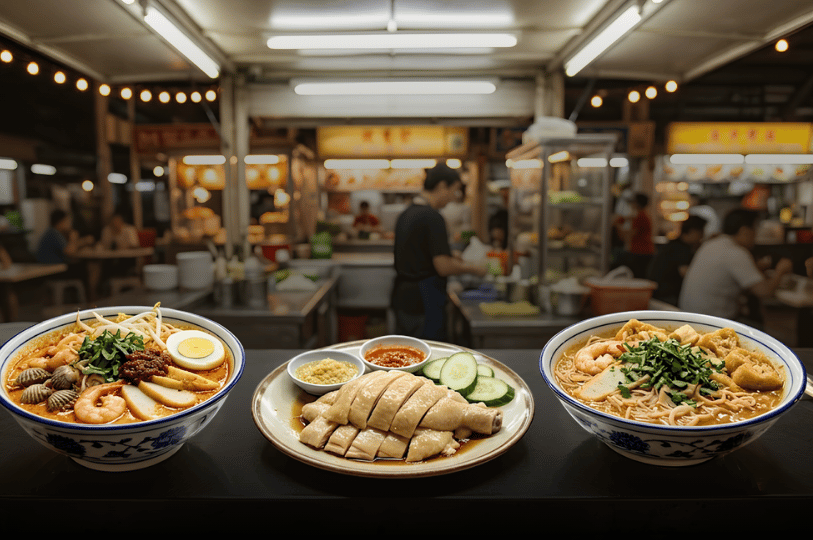
When you walk along East Coast Road, the visual landscape is immediately dominated by a single culinary item: laksa. Signboards bearing variations of the same name compete for pedestrian attention, while the distinct aroma of reduced coconut milk and dried shrimp permeates the street.
We observe a similar concentration at Maxwell Food Centre, where the sheer volume of poached chicken hanging in display windows defines the physical identity of the space. These strong associations between a specific dish and a geographical area do not happen by accident; they are the result of clear historical and operational mechanics.
The origin of a neighborhood dish usually begins with a pioneer vendor who successfully taps into the demographic profile of the immediate area. Historically, hawkers settled where their primary customer base lived or worked. In Katong, the historical presence of the Peranakan community provided a steady, localized demand for a specific, heavily spiced noodle soup. Once a vendor establishes a reliable, high-volume trade, the location transforms into an informal destination for that specific flavor profile.
What cements the dish to the neighborhood, however, is the subsequent operational clustering. Recognizing the established foot traffic, competing vendors deliberately set up stalls in the immediate vicinity to capture the overflow.
This concentration creates a localized micro-economy. Supply chains rapidly adapt to service this cluster efficiently. Fresh coconut milk suppliers, specialized noodle manufacturers, and poultry distributors optimize their delivery routes for these specific blocks.
This localized supply network lowers operational friction, making it easier for new vendors of the same dish to survive in that exact location.
Over decades, this clustering solidifies the district’s reputation. The neighborhood itself becomes a necessary validator for the food. A stall selling Katong-style laksa or Maxwell-style chicken rice in a completely different district must use the original neighborhood’s name simply to signal authenticity.
Ultimately, the tie between a dish and a location is a systematic evolution of localized demand, clustered competition, and optimized supply chains, transforming a local recipe into a permanent geographical marker.