
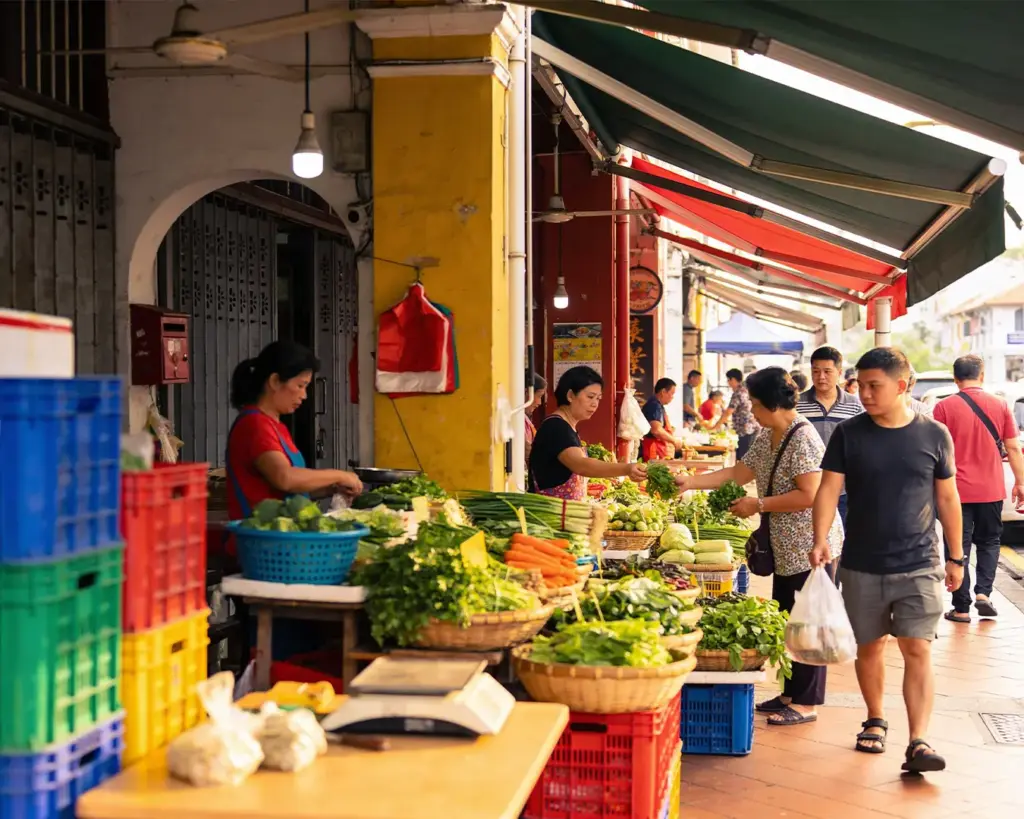
The air in the morning market carries a heavy, damp heat that clings to the skin long after the early rain has stopped. I stand in the narrow, crowded aisles of a neighborhood I am still learning to navigate. Around me, the environment hums with a quiet, practiced efficiency. The sharp, clean scent of bruised lemongrass rises from woven baskets, mingling with the deep, savory weight of roasted meats hanging behind glass windows. There is a continuous clatter of heavy cleavers meeting wooden blocks, a steady rhythm that anchors the chaos of the morning rush.
I watch an elderly vendor deftly fold pale green leaves around glutinous rice, her hands moving with the certainty of someone who has performed this exact motion thousands of times. It is a beautiful, intricate language of sustenance, but it is one I do not yet speak.
Suddenly, the sharp crackle of hot oil cuts through the ambient noise. Two stalls down, someone drops a handful of sliced shallots into a wok. For a brief second, the sweet, stinging edge of the frying allium hits the back of my throat, and the unfamiliar market drops away. I am no longer standing on a wet tiled floor in a new city. Instead, I am standing in the cool, shadowed kitchen of my childhood home in India, watching mustard seeds spit and dance in a blackened iron pan.
In that kitchen, food was never simply about filling a physical hunger. It was the absolute rhythm by which we measured our days and marked the shifting of the seasons. The morning was announced not by a clock, but by the high-pitched whistle of the pressure cooker and the nutty, comforting aroma of ghee melting over warm rice. In the summer, the house smelled of ripening mangoes and sour tamarind; during the heavy monsoon rains, it smelled of roasted cumin, crushed ginger, and strong, dark tea. To leave that landscape was to lose my internal compass.
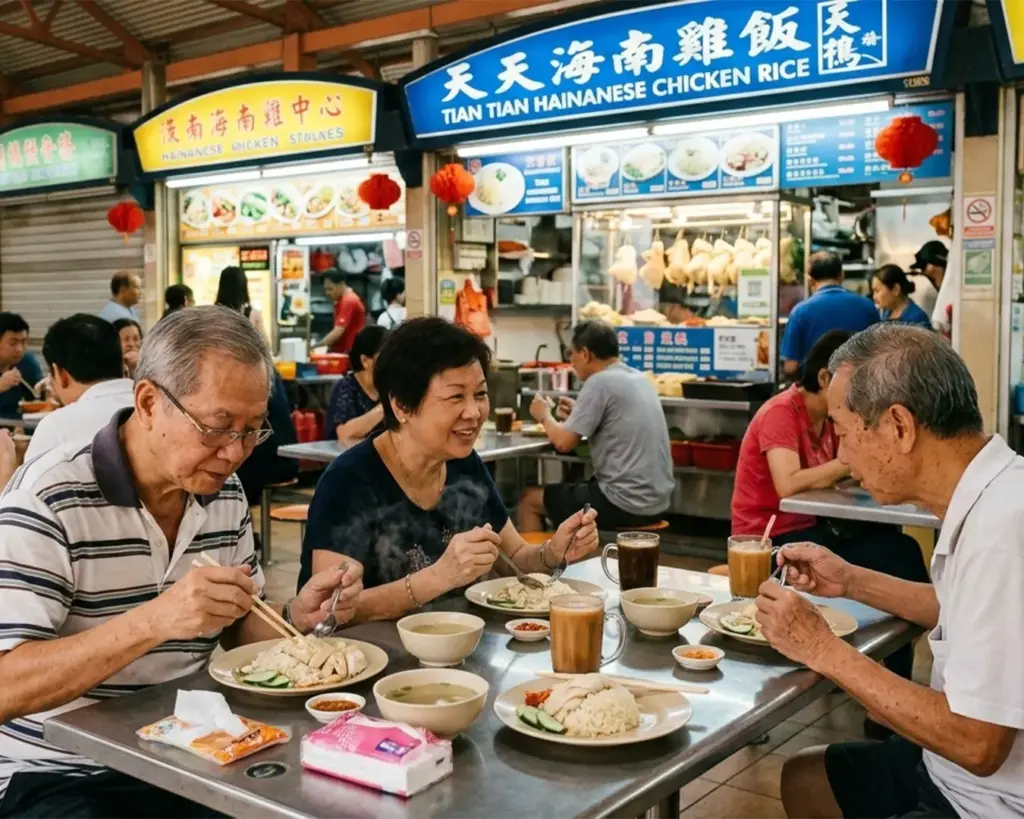
Arriving in a new culinary world feels like stepping into a room where a complex, layered conversation has been going on for centuries. You must listen quietly before you can understand the context. Here, the vocabulary on the plate is entirely different. The dark, caramelized depth of thick soy sauce replaces the bright earthiness of turmeric. The gentle, floral notes of pandan take the place of the sharp, citrusy bite of fresh coriander.
Yet, as I spend more mornings walking through these unfamiliar aisles, I begin to realize that the underlying grammar remains exactly the same.
In both places, the physical act of preparing food is a quiet, daily transmission of history. The hands that shape a dumpling here, much like the hands that roll out flatbreads in the kitchens of my memory, are performing movements perfected by generations long gone. Every recipe is a survival story. Food is a physical artifact that outlasts migration, weathering the passage of time when other traditions fade. It is our most immediate introduction to a culture, offering a profound way to enter into a conversation with the past without saying a single word.
I buy a small bundle of unfamiliar leafy greens and a knot of fresh ginger from a smiling vendor, placing them carefully into my cloth bag. I do not yet know the exact names of everything I am carrying, nor do I fully grasp the deep well of memories they evoke for the people who grew up eating them. But as I begin the slow walk home, the sharp, clean fragrance of the ginger seeps through the fabric. It is a scent that belongs equally to the strong morning tea of my childhood and the clear, nourishing broths of my present. We do not have to leave one culinary world behind to inhabit another. We simply expand the table, allowing the new flavors to sit quietly alongside the old.