
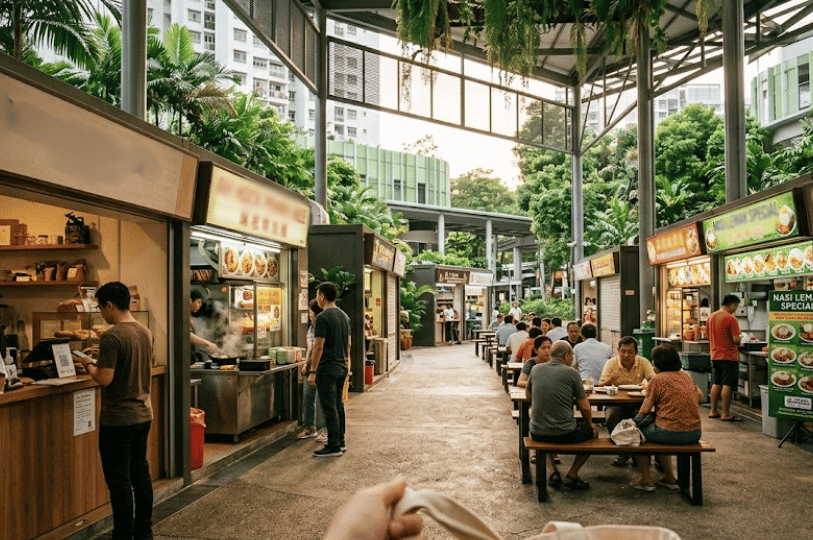
You do not always see a place before you remember it. Often, you breathe it in first.
Walking down the narrow stretch of a neighborhood wet market just after dawn, the air is heavy and damp. Before the metal shutters are fully rolled up, before the first crowds form their silent, patient queues, there is the sharp, unmistakable scent of charcoal catching fire.
It drifts down the concrete corridor, mingling with the deep, earthy aroma of dark soy sauce and the sweet, grassy edge of bruised pandan leaves.
In a fraction of a second, that specific combination of smells bypasses the present moment. It pulls you backward. You are no longer just a rushing commuter passing through; you are suddenly standing in a familiar tiled kitchen from decades ago, watching older hands carefully tend to a simmering pot.
We build our maps of the city using landmarks, street signs, and subway exits, but our internal geography is drawn almost entirely by scent. The aroma of roasted robusta beans and caramelized sugar anchors us to a specific corner kopitiam where we once spent our Sunday mornings.
The heavy, comforting fragrance of star anise and cinnamon reminds us of a late-night supper spot we used to visit when the city felt much larger than it does now. These smells act as invisible tethers, holding our memories to physical spaces long after the people and the stalls have evolved.
When a neighborhood undergoes renovation, the visual landscape shifts completely. Familiar signs are taken down, and old plastic chairs are replaced with polished wood. Yet, if a single hawker remains, quietly boiling the exact same recipe they have used for three decades, the air around that corner stays exactly the same.
We navigate these spaces breathing deeply, searching for the familiar. We pause when the wind carries the scent of toasted coconut or freshly fried shallots. It is a quiet, involuntary reaction—a sudden stillness in the middle of a moving crowd.
We stop, not merely to figure out where the smell is coming from, but to quietly remember who we were the last time we stood in its warmth.