
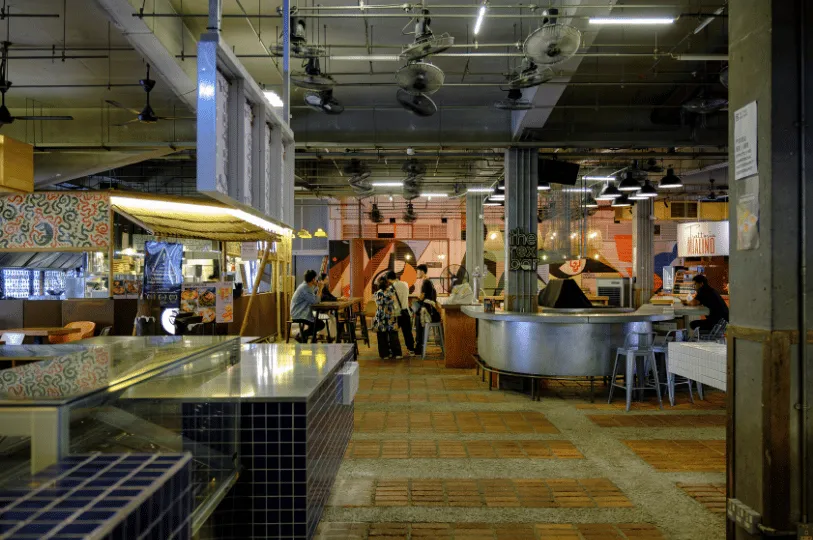
To the uninitiated, a Singaporean hawker centre at one in the afternoon looks like pure chaos. The air is thick with the smell of wok hei and the deafening clatter of melamine plates. But if you look closely, you realize it is a highly calibrated urban ecosystem.
Navigating this space begins with a single, high-stakes decision: choosing the right table.
It is never just about finding an empty seat. It is an exercise in spatial awareness and calculated pragmatism. You must weigh multiple competing variables. Sit too close to a popular roasted meat stall, and you will spend your lunch enveloped in a greasy haze, constantly dodging the elbows of people standing in the queue.
Sit too close to the tray return rack, and the lingering scent of leftover broth will ruin your meal. You also have to calculate the trajectory of the ceiling fans. In a naturally ventilated space, securing a table directly in the path of a heavy-duty fan is the ultimate victory.
Then comes the delicate reading of human behavior. You learn to scan the aisles, identifying which diners are taking their last bites and who is lingering over an iced kopi.
You master the subtle, non-intrusive hover—standing just close enough to claim the impending vacancy without rushing the current occupants. It is an unspoken contract of efficiency.
When a tissue packet is deployed to “chope” a seat, it represents a remarkable display of civic trust, allowing us to divide and conquer the long queues.
Choosing a table might seem like a mundane daily chore. Yet, it perfectly mirrors the way we navigate our dense city. It requires sharp observation, a quiet respect for shared spaces, and a deep understanding of our collective rhythm.