
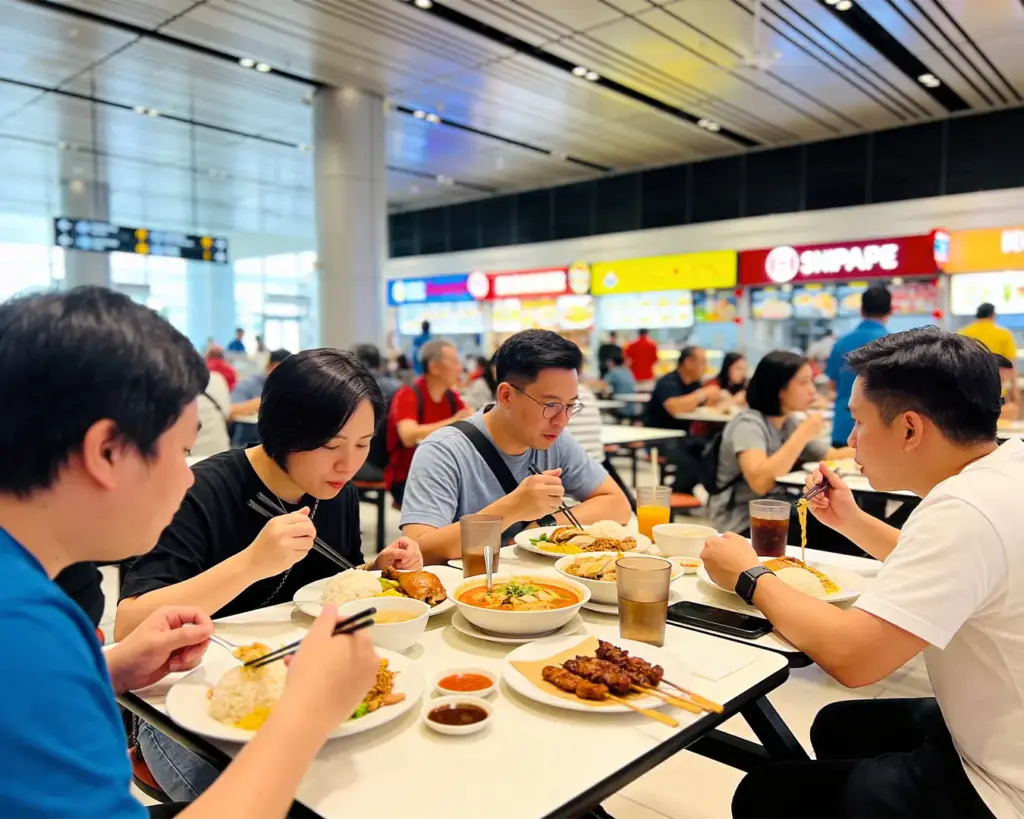
Food courts have always been a permanent fixture in Singapore’s urban landscape, as essential to shopping malls as escalators and anchor tenants. Growing up, I remember them as predictable spaces—usually in the basement—offering a standard selection of local dishes at slightly higher prices than hawker centres. The lighting was purely functional, the tables uniform, and the choices always familiar: chicken rice, ban mian, yong tau foo. But today, I’m noticing how much this model is evolving and transforming before my eyes.
The most obvious change is the shift from being purely functional to becoming a curated experience. Newer food courts aren’t just about feeding people anymore—they’re themed, designed to impress. I’ve seen food courts with “heritage street” vibes, complete with faux shophouse facades, and others embracing the minimalist industrial look with exposed pipes and polished concrete floors. It’s clear that the layout isn’t just about cramming in as many tables as possible. Now, it’s about creating zones, guiding foot traffic, and setting up those Instagram-worthy corners. It’s a far cry from the purely utilitarian spaces I remember.
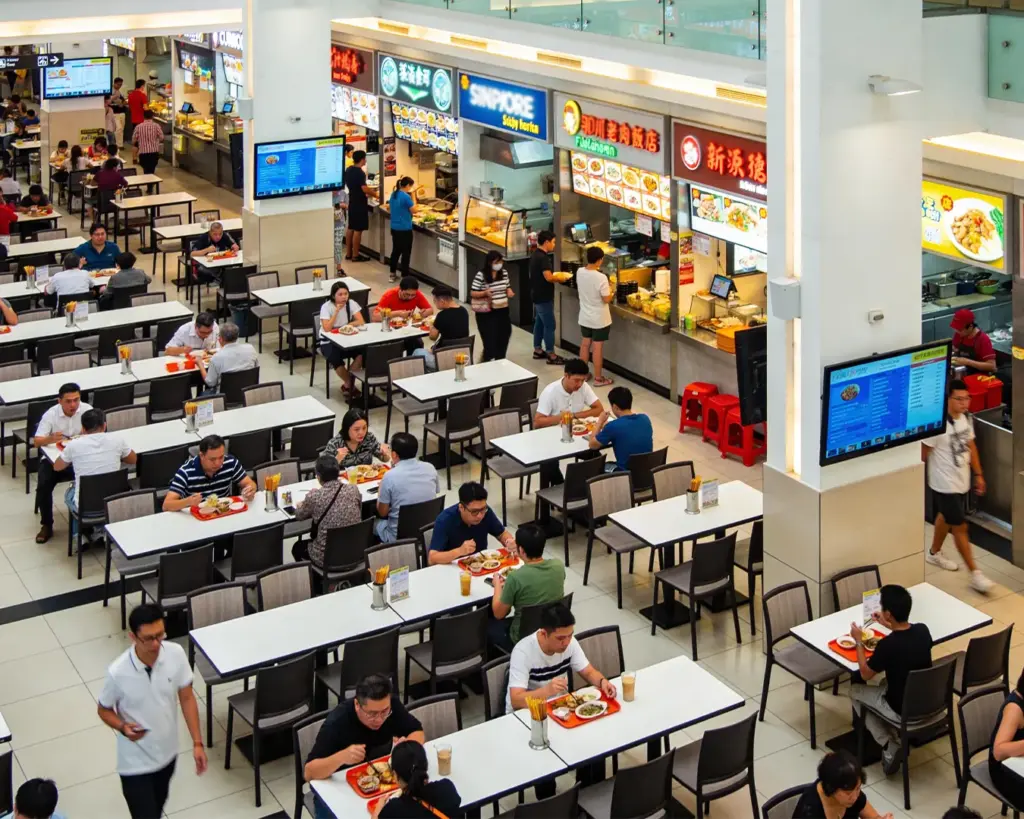
The mix of stalls has also changed drastically. Those old legacy stalls that have been around forever? They’re still there, but now they’re joined by newer, often international players. It’s not unusual to see an authentic Japanese ramen stall with bowls starting at $12.80 right next to a local fishball noodle vendor charging $5.50. This new mix has also introduced tiered pricing. What used to be a no-brainer for affordable, air-conditioned comfort food is now a space where people actively choose between budget-friendly staples and higher-end options.
I’ve also noticed that many stalls are no longer run by the single, hands-on family operators I grew up seeing. Instead, there’s a growing presence of centrally managed, multi-outlet chains. These brands deliver the same consistent product across multiple locations, benefiting from economies of scale. On one hand, this means better quality control, but on the other, I can’t help but feel like some of the unique charm and personality of individual stalls has been lost in the process.
Another interesting shift is how food courts have become testing grounds for new culinary concepts. Startups and aspiring entrepreneurs, often unable to afford standalone restaurants, are setting up shop here. This has brought a wave of exciting, niche offerings—Korean army stew, grain bowls, artisanal coffee. These stalls are clearly catering to a younger, trendier crowd that’s willing to pay more for novelty or to meet specific dietary preferences.
What I’m seeing is the food court evolving from a simple collection of food vendors into a highly curated commercial ecosystem. Today’s food courts are built to serve multiple roles: quick lunches for office workers, family dining spots, and places where new F&B brands can experiment. Watching these changes unfold, I realize they’re more than just a reflection of the food scene—they’re a mirror of Singapore’s shifting economy and changing consumer tastes. The food court is still a fixture, but its identity feels more layered and complex than ever before.