
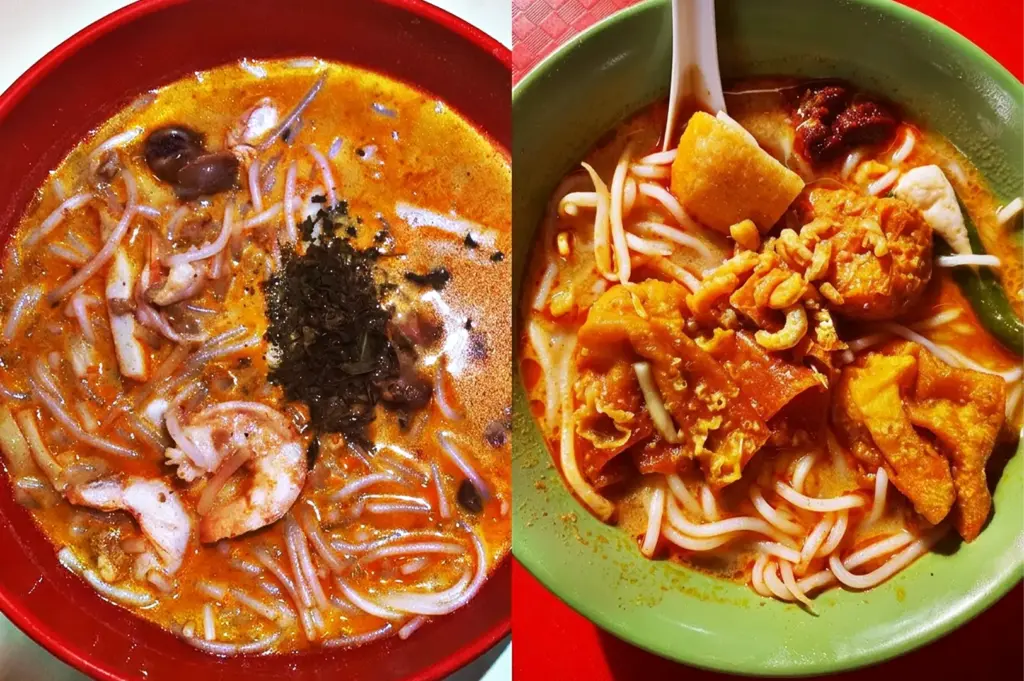
Meera’s Note: I’ve made a few small updates to this guide so it reads more clearly for everyone, and I hope you enjoy moving through these laksa bowls as much as I enjoyed revisiting them.
Laksa is an enduring reflection of Singapore’s identity. It tells a story of migration, cultural intermarriage, and the brilliant alchemy of Southeast Asian spices. Today, that conversation has grown even more complex. Laksa consists of more than noodles in gravy; it is an entire bowl of memory, habit, and adjustment, shaped by Peranakan cuisine, hawker rhythms, and the way each stall balances richness with restraint.
That same hawker rhythm appears in what regulars return to at food centres like Maxwell as explored in our website, where everyday eating is shaped as much by routine and memory as by the dish itself.
Before looking at how newer bowls reinterpret the dish, it helps to begin with the traditional laksa worth trying, from stalls known for a generous amount of gravy to bowls on the lighter side, each one finding its own perfect balance of spice, warmth, and neighbourhood memory.
Traditional Katong Laksa — Where It All Began
When we talk about traditional laksa in Singapore, we are primarily talking about Katong Laksa. Born in the vibrant, culturally rich neighbourhood of Katong in the east, this style is famous for its “just a spoon” approach.
But Singapore’s traditional laksa story does not belong to Katong alone. It also moves through older hawker centres, neighbourhood stalls, claypot versions, and bowls that have stayed close to the routines of regular diners. Here are some of the most revered traditional bowls from the top laksa stalls.
1. Janggut Laksa: The Original Katong Laksa at Queensway Shopping Centre
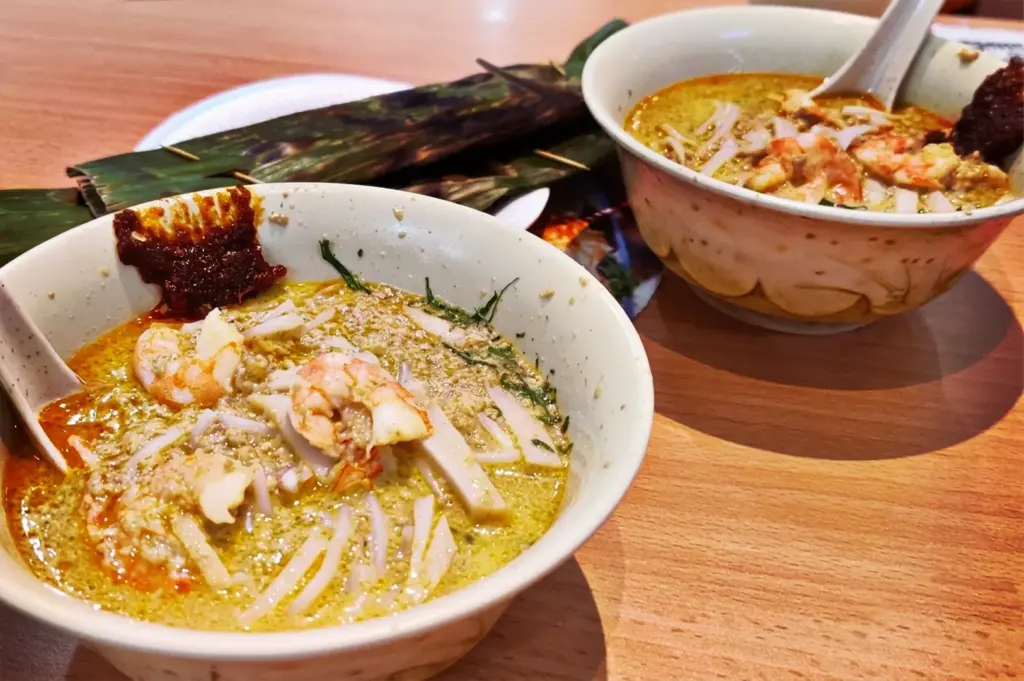
Location: Queensway Shopping Centre, Roxy Square (and other branches)
Often credited as the original Katong laksa, Janggut Laksa’s recipe dates back to the 1950s. Janggut Laksa is widely regarded as the original Katong laksa and is known for its rich and flavourful broth and fresh ingredients. The broth here is milder, less aggressively fiery, and leans heavily into the sweet, comforting embrace of coconut milk.
The stall is named after the original hawker, who sported a distinctive beard (“janggut” in Malay). For purists looking for the historical baseline of Singaporean laksa, this is an essential pilgrimage. Because it sits at Queensway Shopping Centre, this is also a practical laksa stop if you are moving between Alexandra, Holland Village, or Ghim Moh Market.
Price List:
Small bowl: $6
Medium bowl: $7
Large bowl: $8
Opening Hours:
Daily: 10:30am – 4:30pm
2. 328 Katong Laksa: Famous Stall on East Coast Road
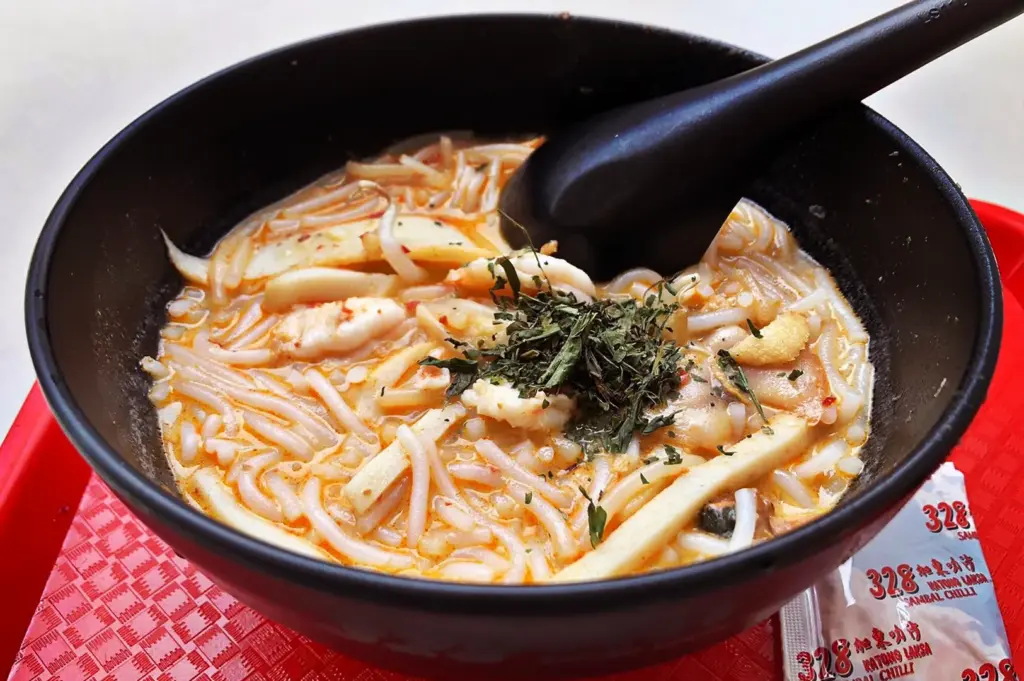
Location: East Coast Road
Perhaps the most globally famous name on this list, 328 Katong Laksa vaulted into the international spotlight after beating Gordon Ramsay in a local hawker challenge. The laksa broth here is gritty in the best possible way, thick with the texture of finely ground dried shrimp and coconut milk. It is robust, unapologetically rich, and built around a familiar Katong-style mix of cockles, prawns, tau pok, fishcake slices, and short-cut rice vermicelli that can be eaten easily with a spoon.
Service is usually fast and practical, so this is best for readers who want a direct, filling bowl with spicy curry coconut milk that clings heavily to the noodles. It also also works as a natural fallback along the trail, especially if Katong Laksa George’s laksa on Changi Road is temporarily closed.
Price List:
Small bowl: $5.50
Large bowl: $7.50
Opening Hours:
Daily: 9:30am – 9:30pm
3. Sungei Road Laksa: Jalan Besar's Charcoal-Cooked Classic
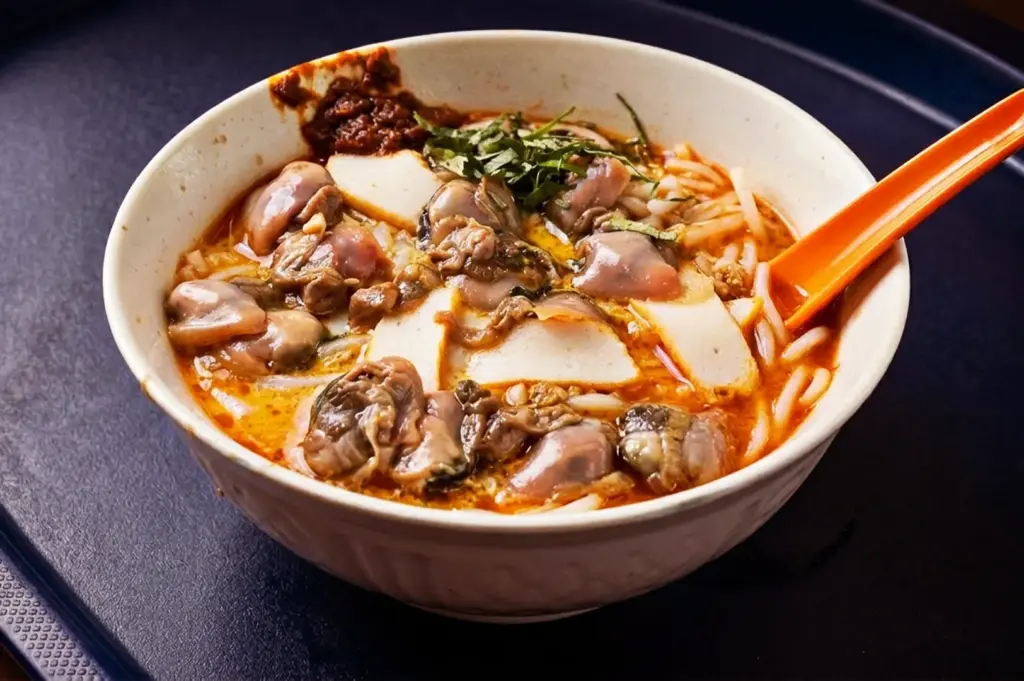
Location: Jalan Besar, Jalan Berseh
Sungei Road Laksa is a magnificent outlier among laksa stalls. While most stalls have switched to modern gas stoves, this humble pushcart-style operation continues to simmer its laksa broth over a charcoal fire. This archaic method imparts a subtle, lingering smokiness to the soup that cannot be replicated by any other means.
Price List:
Single serving: $4
Opening Hours:
Thurs – Tues: 9:30am – 4:00pm
Closed on Wednesdays
4. 928 Yishun Laksa: Neighbourhood Bowl in the North
Location: Block 928 Yishun Central 1
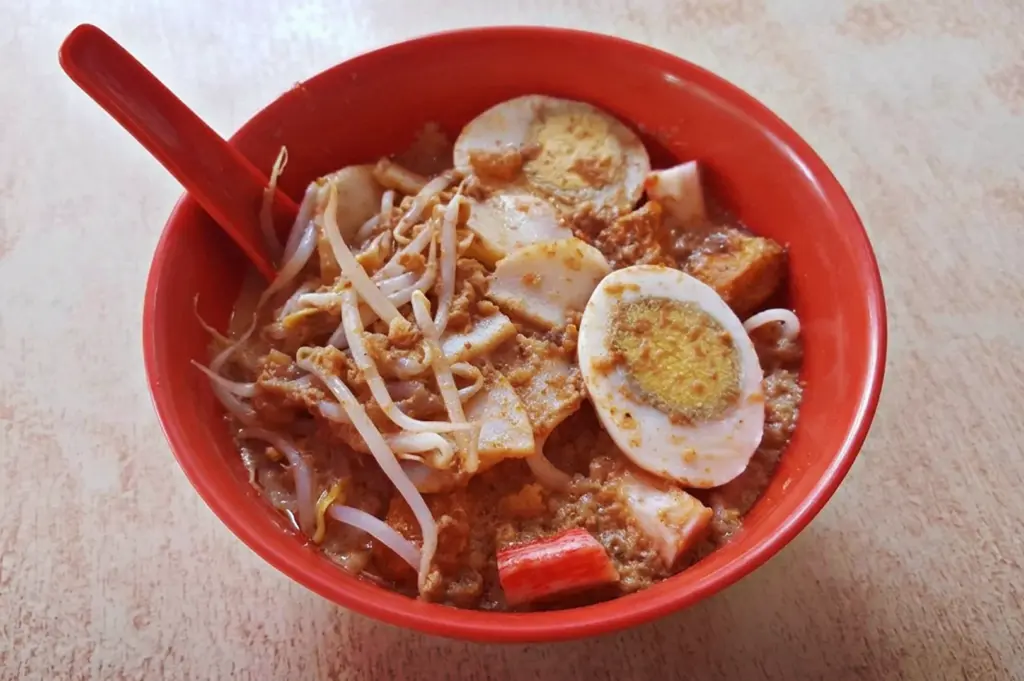
928 Yishun Laksa is known for a bowl that feels generous without becoming too heavy. Their laksa serving comes with thick bee hoon, crab stick, tau pok, fishcake, boiled egg, and cockles, giving readers a fuller, more ingredient-packed version compared to regular laksa stalls.
The broth sits on the lighter side, creamy but not overly rich, with a gentle heat that can be built up with some sambal chili. Expect a queue during busier hours, so this is better for readers who do not mind waiting for a more filling bowl rather than a quick in-and-out stop.
Price List:
Single serving: $4
Opening Hours:
Mon – Sat: 8:30am – 6:00pm
Closed on Sunday
5. Depot Road Zhen Shan Mei: Claypot Laksa In Alexandra Village
Location: 120 Bukit Merah Lane, Alexandra Village Food Centre
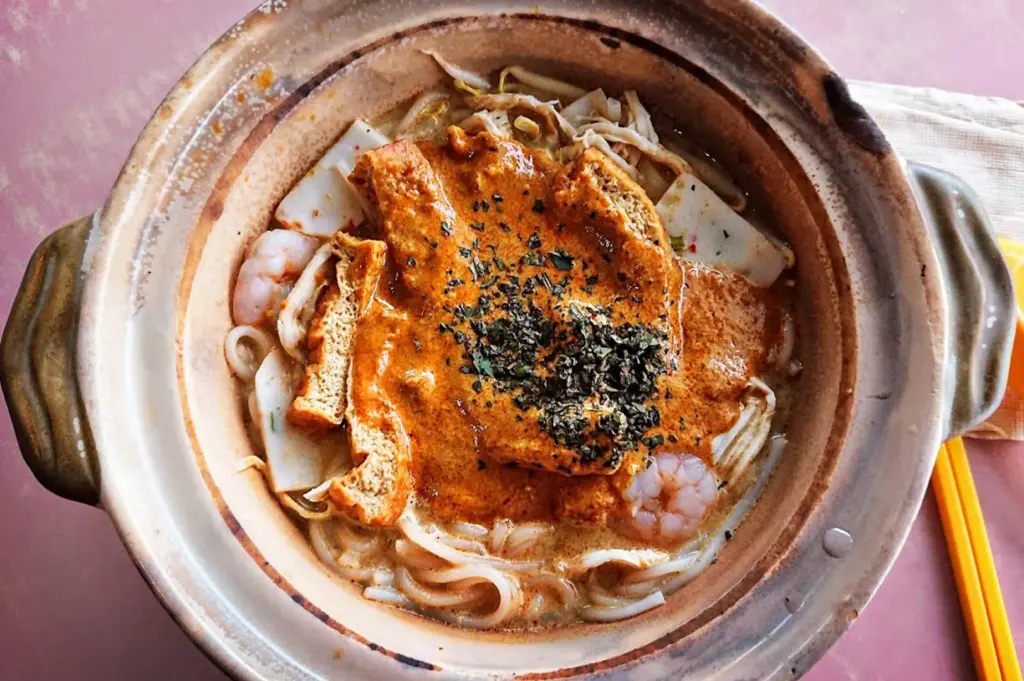
Depot Road Zhen Shan Mei is known for its Alexandra Village claypot laksa, a richer, heat-retaining version of the familiar hawker bowl at. The gravy is thick with freshly squeezed coconut milk, giving the spicy soup a deeper body as it settles around the noodles. Served in a claypot, the laksa stays hot longer, so each spoonful feels warmer, heavier, and more concentrated than a standard bowl.
The toppings usually include prawns, cockles, fishcake, and tau pok, adding texture without pulling attention away from the gravy. I’d come here when I want laksa that feels heavier, hotter, and more grounded in the old hawker-centre way of eating.
Price List:
Small bowl: $4
Medium bowl: $5
Large bowl: $6
Opening Hours:
Mon – Sat: 9:00am to 5:00pm (Note: hours may vary)
Closed on Sunday
Modern Laksa Bowls — Where Laksa Moves Forward
When we talk about modern laksa in Singapore, we are looking at the ways a familiar bowl begins to shift. Some versions become drier or richer, while others move away from the usual curry gravy into sourer or more playful forms.
But modern laksa does not mean leaving tradition behind. It often keeps the memory of the original bowl close, then changes the texture, toppings, serving style, or rhythm of eating. Here are the bowls that show how laksa keeps changing, one stall and one neighbourhood at a time.
1. D'Laksa Compass One: Penang Asam Laksa at Compass One
Location: 1 Sengkang Square
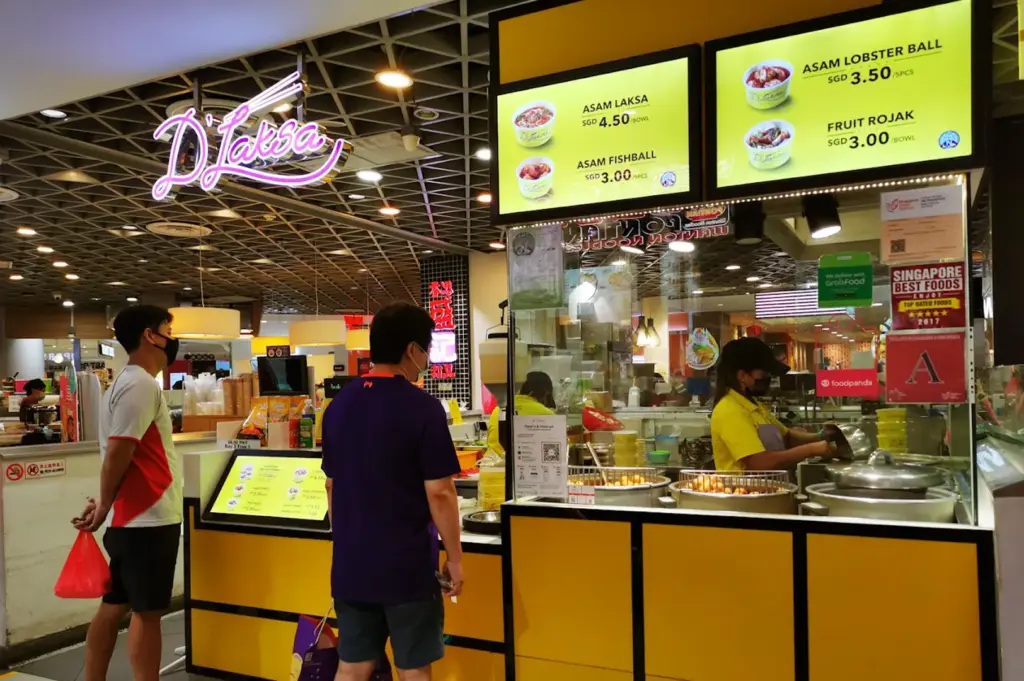
D’Laksa at Compass One feels different from the coconut-rich bowls most of us picture when we think of laksa in Singapore. It leans into sour asam, with a tangy broth that feels somewhat brighter than the usual coconut flavour.
This is a good stop for readers who want laksa on the lighter, sourer side, especially if coconut milk-based bowls feel too heavy. Their laksa leaves a feeling that’s quick, clean, and a little more refreshing than comforting.
Price List:
Asam Laksa: $6.50
Asam Laksa Go Big: $8
Asam Fishball: $4.50
Asam Lobster Ball: $5
Opening Hours:
Daily: 11:00am to 10:00pm
2. Curry Times: Dry Laksa Goreng from a Local Chain
Location: Airport Boulevard Terminal 3, Singapore (and other branches)
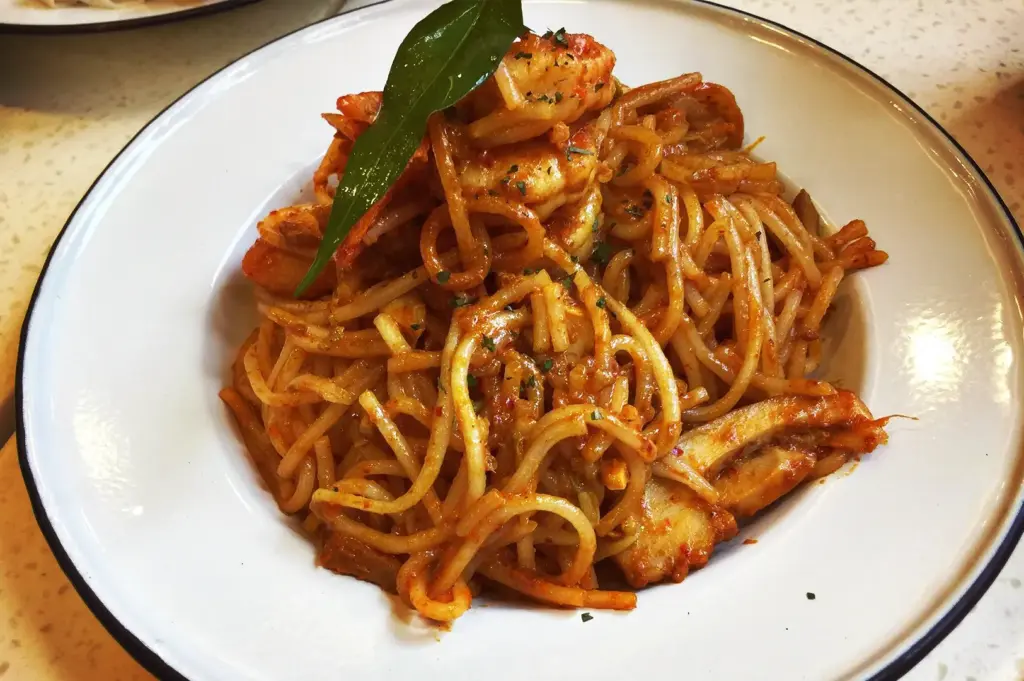
Curry Times’ Dry Laksa Goreng turns laksa into a stir-fried noodle dish, with thick bee hoon or hor fun tossed in laksa spices and served with chicken, prawn, and egg. I’d choose this when I want the flavour of laksa without the heaviness of gravy.
It feels more like a casual seated meal than a hawker-centre bowl, so it works for days when air-conditioning, comfort, and a familiar local chain setting matter more than old-school atmosphere.
Price List:
Dry Laksa Goreng: $11.20
Opening Hours:
Most outlets: Daily, 11:00am to 10:00pm
Changi Airport Terminal 3: Daily, 8:00am to 10:00pm
Changi Airport Terminal 4: Daily, 8:00am to 8:00pm
3. Woo Ji Cooked Food: Budget Laksa with a Different Hawker Rhythm
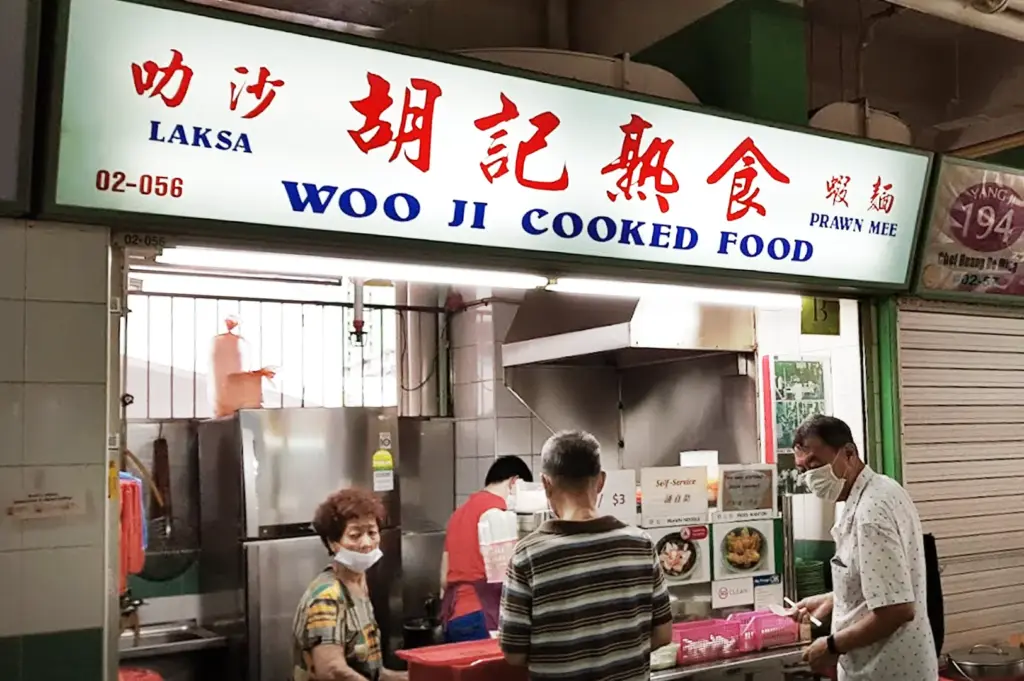
Location: Chinatown Complex Market and Food Centre, #02-056
Woo Ji Cooked Food, I believe, earns its place here because its laksa creatively shifts away from the expected Katong-style bowl. The laksa is known for a very affordable price point and a fuller topping mix, with tau pok, green chilli yong tau foo, fried fishball, crispy fried wantons, dried shrimp, and light but spicy gravy.
I’d come here early, because the stall opens for only a short morning window and items can sell out before closing. It is best for readers who want a simple, old-school Chinatown breakfast bowl with a slightly unusual topping style, rather than a rich coconut-heavy laksa.
Price List:
Small bowl: $2
Medium bowl: $3
Large bowl: $4
Opening Hours:
Wed to Sun: 6:00am to 9:15am
Closed on Monday and Tuesday
4. D’Life Signature: Penang Asam Laksa with a Vegetarian-Restaurant Setting
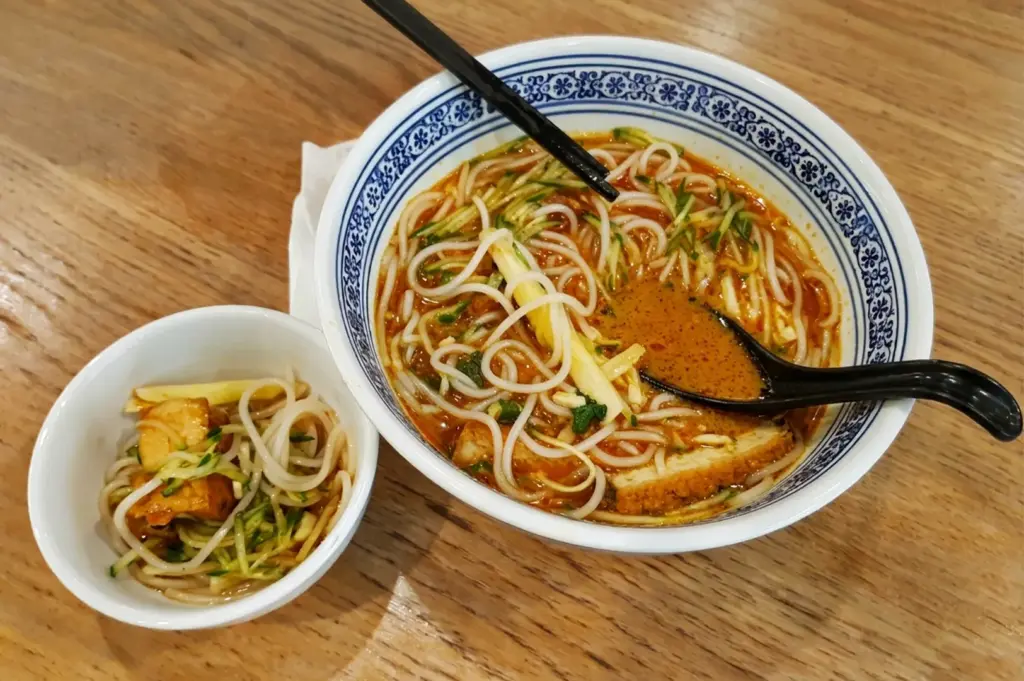
Location: 10 Sinaran Drive Square 2 Novena Square 2
D’Life Signature’s Penang Asam Laksa feels like a quieter turn away from the coconut-rich bowls most of us expect from laksa. The broth also has sour asam, but with a tangy tamarind base that tastes sharper and vibrant than curry laksa.
I’d choose this when I want laksa that feels lighter and more tart, especially when coconut milk feels too heavy. It feels modern because it gives laksa a different shape in Singapore: regional, sour, and restaurant-style rather than purely coconut-based.
Price List:
Asam Laksa: $10.30
Opening Hours:
Daily: 2:00pm until sold out
5. Qi Ji: Dry Seafood Laksa Without the Usual Broth
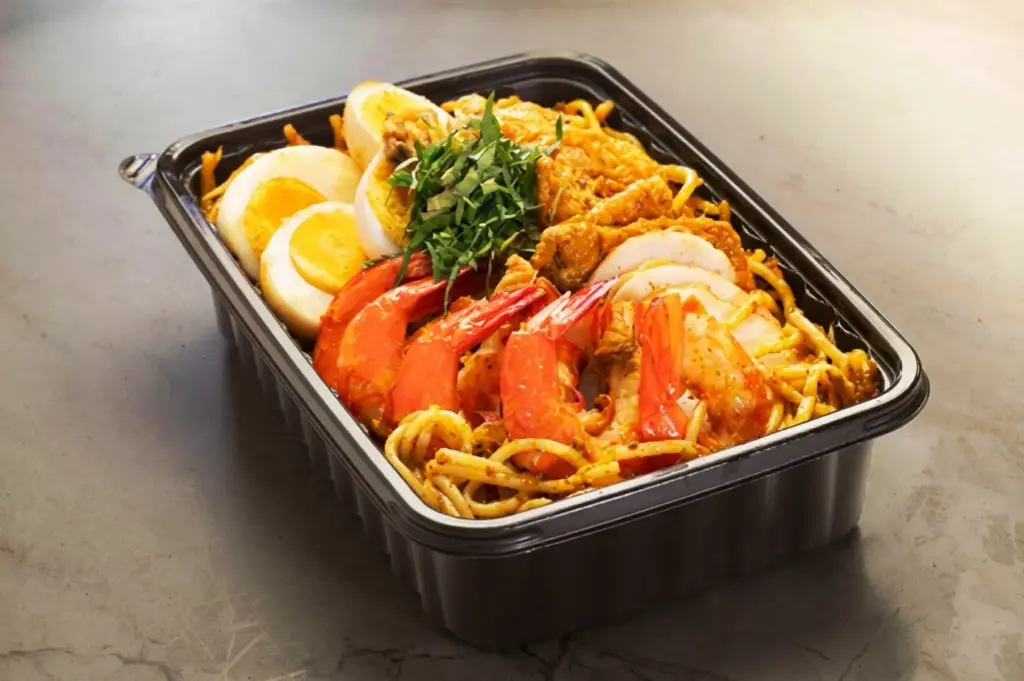
Location: 23 Serangoon Central #03-10 Nex
Qi Ji’s Dry Seafood Laksa keeps the familiar laksa flavour but takes away the usual broth, so the noodles carry the spice and aromatics more directly. I’d pick this when I want something easier for a quick mall meal, especially when I still want laksa flavour without the weight of a full soup bowl.
Service is straightforward and counter-style, which makes it feel practical for everyday dining rather than a slow laksa stop.
Price List:
Dry Seafood Laksa: $7.80
Regular Laksa: $7.00
Opening Hours:
Mon – Sun: 10.00am to 10.00pm (Last order 30 mins before closing)
Finding Your Perfect Bowl
Food is never static. It moves, breathes, and evolves alongside the people who cook it. There is no single, objective answer to where the best laksa in Singapore can be found, only bowls that speak differently depending on where you are seated.
Start with a classic, spoon-only bowl in Katong to understand the soul of the dish. Then, follow the newer versions to see where that memory is going next. Every bowl, whether traditional or modern, offers a unique window into the culinary heart of Singapore. Take a seat, pick up your spoon, and have a taste of the history for yourself.